
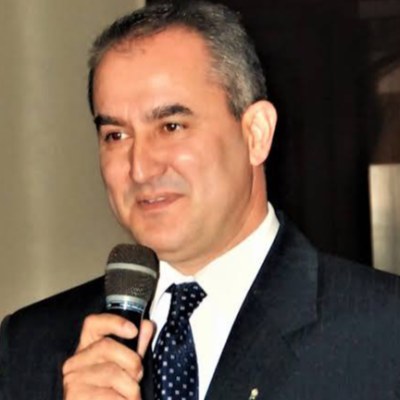
Biography
Professor Benone Păsărin is a Romanian academic and researcher affiliated with the University of Life Sciences “Ion Ionescu de la Brad” in Iași, Romania, where he is a Full Professor in Animal Science at the Faculty of Food and Animal Sciences. With more than three decades of academic, research, and university management experience, his professional activity encompasses animal biology, breeding and reproduction, aquaculture, fisheries, fish physiology, aquatic animal production, and the sustainable management of biological resources. An important component of his scientific experience is his involvement in research on ornamental fish, particularly the guppy (Poecilia reticulata), a widely recognized model organism in evolutionary biology, behavioural ecology, reproductive biology, ecotoxicology, and experimental studies of adaptation and phenotypic variation. His research contributions and long-standing collaborations in this area provide a relevant scientific foundation for his editorial involvement in Poeciliid Research.
Professor Păsărin graduated from the Faculty of Animal Husbandry and Veterinary Medicine of the Agronomic Institute of Iași, now the University of Life Sciences “Ion Ionescu de la Brad”. Between September 1986 and July 1991, he completed specialized university training in animal science, graduating as an engineer in animal husbandry. He subsequently pursued doctoral studies at the same institution, obtaining his PhD in Agricultural and Forestry Sciences, in the field of Animal Science, in 1997. His academic education provided a comprehensive foundation in animal biology, breeding, reproduction, production technologies, and the scientific management of animal populations. These areas have remained central to his academic and research activities throughout his career.
His university career began in 1991 at the institution in Iași, where he successively held the academic positions of university teaching assistant, lecturer, and associate professor before attaining the rank of Full Professor in 2007. Throughout his academic career, he has combined university teaching with scientific research, participation in competitive research projects, the development of experimental methodologies, and the publication of scientific papers and academic materials. His professional experience includes teaching and research in animal production, breeding and reproductive technologies, aquaculture, fish farming, fisheries management, and the biological and technological aspects of aquatic animal production.
An important dimension of Professor Păsărin's scientific activity concerns ornamental fish biology and the development of guppy strains with improved biological and production characteristics. His research collaborations have addressed several aspects of Poecilia reticulata biology, including environmental adaptation, temperature tolerance, growth performance, reproductive biology, population ecology, and the effects of environmental contaminants. These investigations have contributed to a broader understanding of the guppy as both an ornamental aquaculture species and an experimental model for studying biological responses to environmental conditions.
One of his notable contributions to poeciliid research is the investigation of the invasive potential of the exotic guppy in temperate environments. In the 2007 paper “The invasive potential of the exotic guppyfish (Poecilia reticulata Peters 1859) in temperate zone”, co-authored with Bura, Gorgan, Botha, and Petrescu-Mag, he contributed to research addressing the ecological implications of introducing a tropical ornamental fish into temperate aquatic environments. This research direction is particularly relevant to understanding the ecological plasticity of poeciliids, their capacity to establish populations outside their native distribution ranges, and the environmental factors influencing their survival and establishment under non-native climatic conditions.
His scientific involvement in guppy research also includes investigations into thermal adaptation and the development of ornamental fish lines with enhanced resistance to temperature stress. He was among the co-authors of a series of Romanian patent applications concerning biotechnological procedures for obtaining guppy lines with improved thermal tolerance and production characteristics. One of these inventions addressed the development of an ornamental guppy line resistant to hyperthermia, while another focused on a biotechnological procedure for increasing body size in male guppies. The associated patent applications were published by the Romanian State Office for Inventions and Trademarks (OSIM), and two of the inventions were subsequently granted patents in 2012, under patent numbers 123452 and 123451, respectively. These collaborative achievements received recognition at international innovation exhibitions, including PROINVENT and the International Research, Innovation and Invention Salon in Cluj-Napoca. His participation in these research and innovation activities demonstrates practical experience in ornamental fish biotechnology, selective breeding, phenotypic improvement, and the development of commercially relevant guppy strains.
Another relevant research direction concerns the environmental and physiological responses of guppies to chemical contaminants. In 2011, he co-authored the study “New contributions to knowledge of embryonic malformations in guppies”, published in Aquaculture, Aquarium, Conservation & Legislation. This research addressed developmental abnormalities in Poecilia reticulata, contributing to the scientific understanding of embryonic development and morphological disturbances in this species. In 2012, he also co-authored “Investigation on acute toxicity of lindane in guppies, Poecilia reticulata Peters, 1859”, published in Poeciliid Research. This contribution addressed the acute toxicological effects of lindane, an organochlorine pesticide, using guppies as an experimental model. Together, these studies illustrate his involvement in research connecting fish developmental biology, environmental toxicology, and the assessment of chemical stressors in aquatic organisms.
His research collaborations have further addressed the reproductive and physiological consequences of exposure to environmental contaminants. In 2013, he co-authored a study investigating the effects of long-term exposure to sublethal concentrations of vanadium on guppy fertility and secondary sexual traits. This research examined the relationship between environmental metal exposure, reproductive performance, and sexually dimorphic phenotypic characteristics. Such investigations are relevant to the broader field of poeciliid biology, particularly the use of reproductive parameters and secondary sexual traits as indicators of environmental stress and potential endocrine or reproductive disruption.
More recent scientific contributions have extended his involvement in the evolutionary biology of poeciliids. In 2025, he co-authored, together with Ioan Valentin Petrescu-Mag, the article “Predation-driven evolution of locomotor performance in guppies: Experimental evidence and field-based convergence”, published in Poeciliid Research. The study addresses the relationship between predation pressure and locomotor performance in guppies, considering experimental evidence alongside patterns observed in natural populations. This research topic is particularly significant in evolutionary ecology because locomotor performance can influence predator avoidance, survival, habitat use, and the expression of adaptive phenotypic variation. The integration of experimental findings and field-based observations provides an evolutionary perspective on the mechanisms through which predation may shape functional traits in poeciliid populations.
Professor Păsărin's involvement in research projects has also included responsibilities related to guppy genetics and environmental adaptation. Within the Excellence Research Programme 2006, he served as the institutional project coordinator representing the University of Agricultural Sciences and Veterinary Medicine of Iași in the complex research project entitled “Identification of RAPD markers associated with the presence of the gene for resistance to low water temperatures in Poecilia reticulata Peters, 1859”. The project, coordinated by Ioan Valentin Petrescu-Mag at the University of Agricultural Sciences and Veterinary Medicine of Cluj-Napoca, investigated the potential association between molecular markers and cold-water tolerance in guppies. This research direction is relevant to the genetic basis of thermal adaptation and the identification of molecular tools that may support selective breeding and the development of ornamental fish populations with improved environmental tolerance.
He has also contributed to postgraduate research training in guppy ecotoxicology. Within a postdoctoral research project entitled “Correlation of phenotypic markers with the concentration of some xenoestrogen pollutants, using as model organism the guppy fish, Poecilia reticulata, Peters 1859”, funded through the POSDRU programme, Professor Păsărin served as academic tutor. The project investigated the potential relationships between phenotypic characteristics and exposure to xenoestrogenic pollutants, using guppies as a model organism. His involvement in this project reflects experience in the academic supervision of interdisciplinary research connecting fish biology, environmental toxicology, endocrine-disrupting chemicals, and phenotypic biomarkers.
In addition to his research on poeciliids, Professor Păsărin has developed a substantial academic profile in aquaculture and fisheries science. His broader scientific interests include fish breeding and rearing, specialized aquaculture, fish physiology, fisheries management, and the sustainable exploitation of aquatic biological resources. This background provides an important complementary perspective for evaluating research on poeciliid species, which are relevant not only to evolutionary and ecological investigations but also to ornamental aquaculture, reproductive management, fish health, and environmental assessment. His experience in animal breeding and production management is particularly pertinent to research involving reproductive performance, phenotypic variation, selective breeding, and the development of fish populations with desirable biological characteristics.
His academic career has also involved significant institutional responsibilities. He served as Chancellor of the Faculty of Animal Husbandry between 2004 and 2008 and subsequently as Dean of the faculty from 2008 to 2016. He also held the position of Vice-Rector of the University of Life Sciences in Iași and has been involved in doctoral education and scientific supervision since 2009. His teaching activities encompass animal breeding, reproductive biology, animal production technologies, aquaculture, fish farming, and fisheries management. Through these responsibilities, he has contributed to the education and professional development of successive generations of specialists in animal science and aquatic production.
Professor Păsărin's professional development has included international postgraduate training in animal bioethics, organic agriculture, agricultural management, and educational methodologies. He has also participated in international scientific and advisory activities related to food security and sustainable agricultural development. His academic experience includes scientific publication, research evaluation, and peer-review activities, further supporting his involvement in the international scientific publishing community.
As an Editor of Poeciliid Research, Professor Păsărin brings together several areas of expertise that are directly relevant to the journal's scientific scope. His experience with Poecilia reticulata includes research on thermal adaptation, ornamental fish breeding, ecological invasiveness, embryonic development, reproductive performance, environmental toxicology, and predation-related evolutionary responses. His participation in collaborative patent development and research projects addressing guppy biology and genetic adaptation provides additional practical and scientific experience. Combined with his academic background in animal science, aquaculture, fish biology, and doctoral research supervision, these contributions provide a sound basis for his involvement in editorial assessment and the evaluation of manuscripts dealing with poeciliid biology and related disciplines.
Overall, Professor Benone Păsărin's academic and research profile combines extensive experience in animal science with a documented history of scientific contributions to guppy biology and poeciliid research. His work spans ecological, physiological, reproductive, genetic, toxicological, and applied aquaculture perspectives, making his expertise relevant to the interdisciplinary nature of Poeciliid Research. Through his research collaborations, participation in scientific projects, contributions to ornamental fish biotechnology, academic supervision, and editorial activities, he supports the development and dissemination of scientific knowledge concerning poeciliids and their importance in evolutionary biology, aquatic ecology, environmental assessment, and ornamental aquaculture.